
Keeping your child safe online is more important than ever. Fortunately, Apple provides powerful built‑in parental controls on macOS through Screen Time, allowing parents to manage app usage, restrict content, set time limits, and monitor activity.
This guide explains how Mac parental controls work, how to set them up, and which features you should use to create a safer digital environment.
What Are Mac Parental Controls?
On modern versions of macOS, parental controls are managed through Screen Time. These tools allow you to:
- ✅ Set daily screen time limits
- ✅ Restrict specific apps and websites
- ✅ Block explicit content
- ✅ Control purchases and downloads
- ✅ Monitor activity reports
- ✅ Manage communication limits
Everything can be controlled locally on the Mac or remotely through Family Sharing.
How to Set Up Parental Controls on Mac
Step 1: Create a Child Account
- Open System Settings
- Click Users & Groups
- Select Add User
- Choose Child Account (if using Family Sharing)
or create a standard account for your child
A separate user account is essential—parental controls won’t work properly on an admin account.
Step 2: Enable Screen Time
- Go to System Settings
- Click Screen Time
- Select your child’s account from the dropdown
- Turn on Screen Time
If you’re using Family Sharing, you can manage controls from your own device.
Key Mac Parental Control Features
1. App Limits
Set time restrictions for specific apps or app categories.
Examples:
- Limit gaming apps to 1 hour per day
- Restrict social media apps during school hours
- Set overall daily device limits
You can customize limits by:
- Specific days
- Weekdays vs weekends
- Individual apps or categories
2. Downtime
Downtime lets you schedule when the Mac cannot be used.
For example:
- Block access from 9:00 PM to 7:00 AM
- Restrict use during homework hours
Only approved apps will remain accessible during downtime.
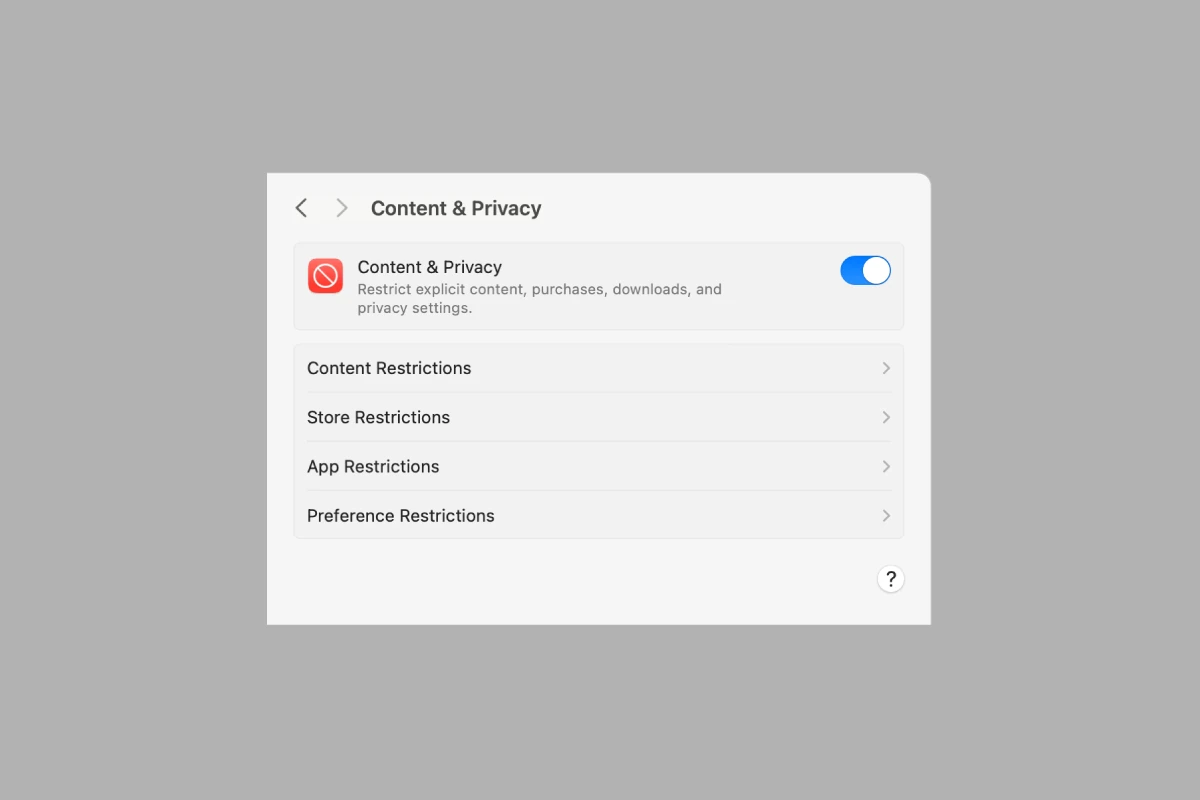
3. Content & Privacy Restrictions
This is one of the most important sections.
You can:
- Block explicit websites
- Limit adult content
- Restrict movies and TV shows by rating
- Prevent app installations
- Disable in-app purchases
- Control location sharing
You can also choose:
- Unrestricted access
- Limit adult websites
- Allowed websites only
The “Allowed websites only” option is especially useful for younger children.
4. Communication Limits
Control who your child can communicate with:
- During allowed screen time
- During downtime
- Phone, FaceTime, and Messages
This is helpful for preventing unwanted contact.
5. Activity Reports
Screen Time provides detailed usage reports:
- Time spent in each app
- Most used apps
- Website visits
- Notifications received
Reports can be viewed daily or weekly.
Using Family Sharing for Remote Control
Family Sharing allows parents to:
- Manage Screen Time from their own Mac, iPhone, or iPad
- Approve app purchases remotely
- Track usage across multiple Apple devices
- Share subscriptions (Apple Music, iCloud+, etc.)
To set up:
- Open System Settings
- Select Family
- Add your child’s Apple ID
This provides centralized control across devices.
Extra Tips for Stronger Parental Controls
✅ Use a Strong Admin Password
Prevent your child from changing settings.
✅ Disable “Allow Changes” in Screen Time
Lock settings to prevent tampering.
✅ Combine with Router-Level Controls
For stronger web filtering, use your Wi-Fi router’s parental controls.
✅ Keep macOS Updated
Security improvements are included in system updates.
Limitations of Mac Parental Controls
While powerful, built-in controls aren’t perfect:
- Tech-savvy teens may try workarounds
- Web filtering isn’t as advanced as some third-party software
- Monitoring doesn’t include full message content visibility
For advanced monitoring, some parents use third-party parental control software in addition to Apple’s tools.
Who Should Use Mac Parental Controls?
Mac parental controls are ideal for:
- Parents of younger children
- Families wanting structured screen time
- Households sharing a family Mac
- Parents who want built-in, privacy-friendly monitoring
Final Thoughts
Mac parental controls through Screen Time provide a robust and user-friendly way to manage your child’s digital experience. With app limits, content filtering, downtime scheduling, and activity reports, parents have the tools they need to promote healthy screen habits.
The key is balance—use parental controls not just to restrict, but to guide conversations about responsible technology use. When combined with open communication, these tools can help create a safer and healthier online environment for your family.