
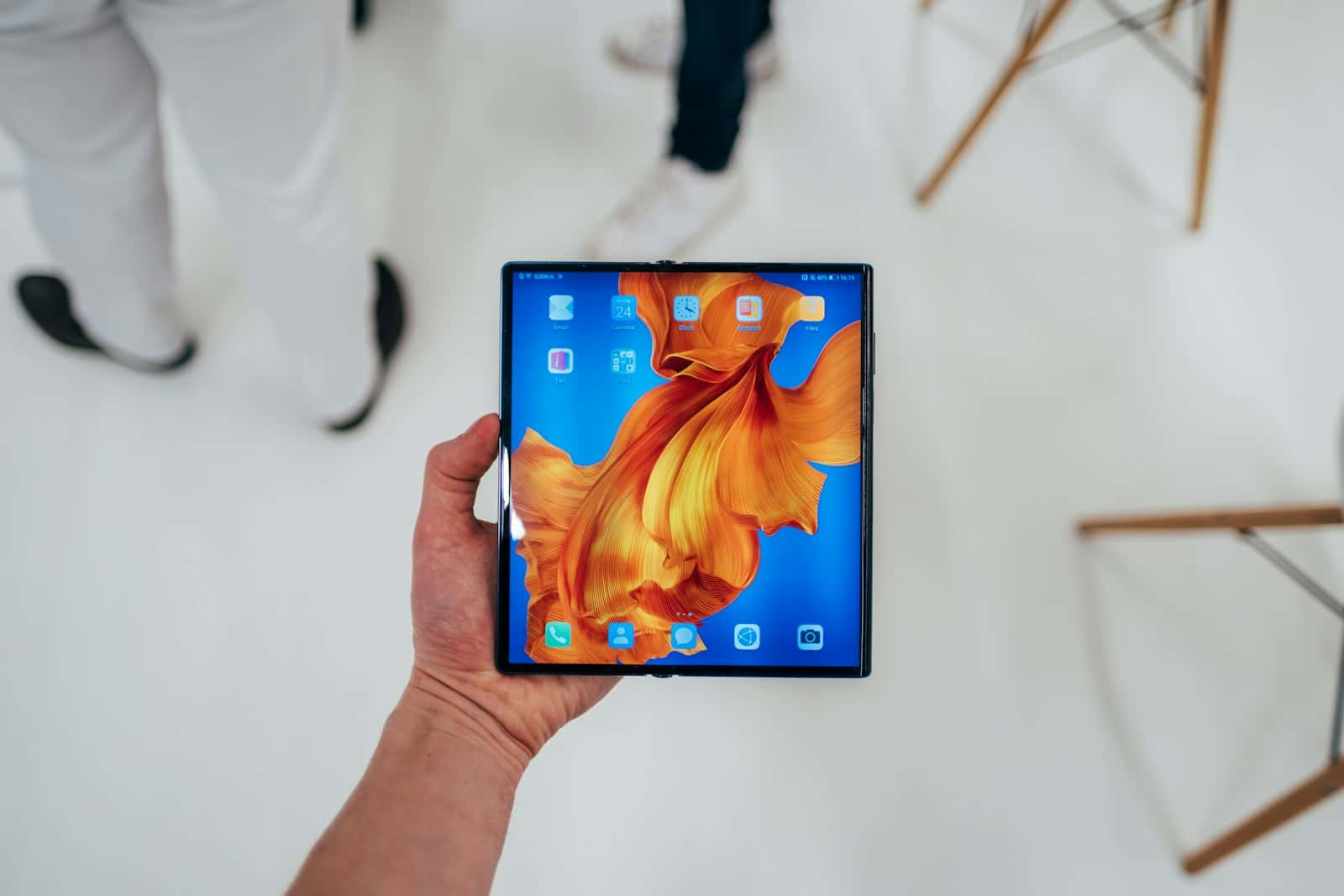
Apple’s long-rumored foldable iPhone is reportedly moving closer to reality, with multiple reports suggesting a launch window in late 2026 or early 2027. Unlike competitors that rushed early foldables to market, Apple is said to be taking its time—focusing heavily on durability, a nearly “crease-free” display, and premium build quality.
Here’s a breakdown of the latest rumors surrounding Apple’s first foldable iPhone.
A Book-Style “Passport” Design
Rather than adopting a clamshell flip design, Apple is reportedly developing a book-style foldable, similar in concept to the Samsung Galaxy Z Fold series. When closed, the device would resemble a compact smartphone. When opened, it would unfold into a mini tablet.
The internal display is rumored to measure 7.8 inches with a 4:3 aspect ratio, making it comparable to an iPad mini. This suggests Apple may position the device as a productivity and media powerhouse rather than just a novelty form factor.
On the outside, a 5.5-inch cover display would allow users to handle everyday tasks without unfolding the device. Reports suggest the outer screen could be slightly squarer than a typical iPhone display.
A Focus on a “Crease-Free” Display
One of the biggest criticisms of current foldables is the visible crease along the folding axis. Apple is reportedly prioritizing a “crease-free” or nearly invisible crease design, even if it means delaying the product.
The company is said to be using:
- A durable CPI (Colorless Polyimide) protective layer
- An advanced titanium alloy hinge
- Ultra-thin internal display components designed for long-term durability
Apple’s reputation for refining existing technology rather than releasing first-generation hardware prematurely could mean a foldable that feels more polished than current market offerings.
High-End Hardware and Performance
As expected, Apple’s foldable iPhone is rumored to be a true flagship device.
Expected Specifications:
- Chip: Likely powered by the next-generation A20 Pro chip
- Battery: Around 5,500mAh, which would be larger than most current iPhones
- Build Materials: Titanium frame and hinge for durability and weight reduction
With a large internal display and flagship-grade silicon, the foldable iPhone could serve as both a smartphone and lightweight tablet replacement.
Camera and Biometrics
Interestingly, Apple may make some design trade-offs to preserve screen quality.
- A rumored 24MP under-display front-facing camera could eliminate the need for a notch or Dynamic Island on the internal screen.
- To minimize display interruptions, Apple may skip Face ID entirely on this model.
- Instead, Touch ID integrated into the power button is rumored to handle biometric authentication.
If true, this would mark the first high-end iPhone in years to rely solely on Touch ID rather than Face ID.
Launch Timeline: 2026 or 2027?
Most reports point to a release in late 2026 or early 2027, potentially alongside the iPhone 18 Pro lineup. Apple is said to be deep in testing phases, evaluating hinge durability and display longevity before committing to mass production.
Given Apple’s cautious approach to new categories—seen previously with products like the Apple Watch and Vision Pro—the company appears determined to avoid the early reliability issues that plagued first-generation foldables from competitors.
Premium Pricing: $2,000–$2,500
Apple’s first foldable is unlikely to be affordable. Current estimates place the device between $2,000 and $2,500, making it one of the most expensive iPhones ever released.
This pricing would position it as:
- A halo product for early adopters
- A productivity-focused device
- A potential iPad mini alternative
- A direct competitor to premium foldables from Samsung and other manufacturers
What It Could Mean for Apple’s Lineup
If launched alongside the iPhone 18 series, Apple’s foldable could:
- Sit above the Pro Max model
- Create a new “Ultra” tier
- Potentially blur the lines between iPhone and iPad
A successful foldable launch could also signal a broader shift in Apple’s hardware strategy, especially if the company brings foldable technology to the iPad lineup later on.
Final Thoughts
Apple’s foldable iPhone appears to be less about being first—and more about being refined. With a rumored 7.8-inch inner display, titanium hinge, A20 Pro chip, and a heavy emphasis on minimizing the display crease, Apple seems focused on delivering a premium, durable device rather than chasing trends.
If the rumors hold true, 2026 or 2027 could mark Apple’s boldest iPhone redesign since the original iPhone X.
For now, the foldable iPhone remains one of the most anticipated—and expensive—Apple products on the horizon.