
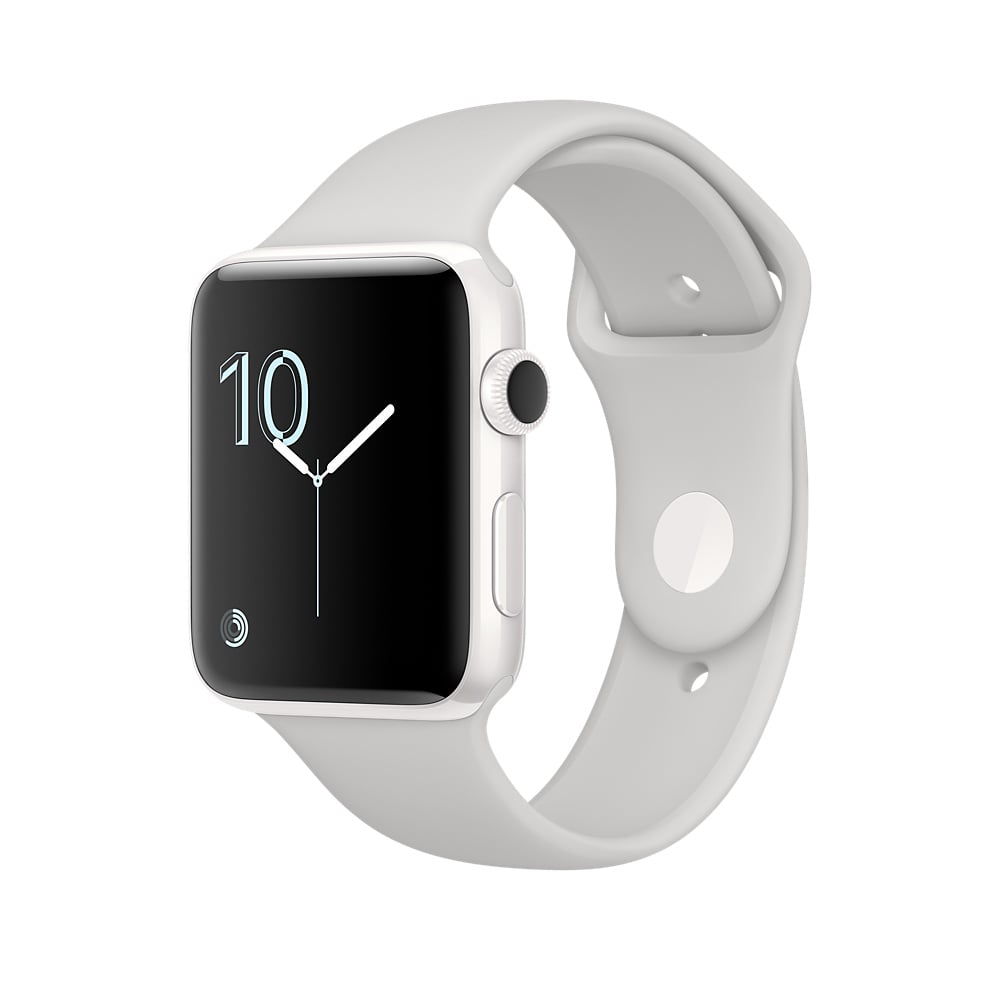
The Apple Watch Series 2, released in September 2016, marked a major milestone in the evolution of Apple’s wearable technology. While it looked similar to the original Apple Watch and Series 1 on the outside, Series 2 introduced meaningful upgrades that transformed the smartwatch from a lifestyle accessory into a more capable fitness and outdoor companion.
A Brighter, Tougher Display
One of the standout improvements of the Apple Watch Series 2 was its significantly brighter display. With up to 1,000 nits of brightness, the screen was twice as bright as its predecessor, making it much easier to read outdoors—even in direct sunlight. This enhancement was particularly useful for runners, cyclists, and anyone using the watch during daytime activities.
The watch also featured improved durability, with stronger glass options including Ion‑X glass (for aluminum models) and sapphire crystal (for stainless steel and ceramic models).
Built for Water Activities
Perhaps the most defining feature of the Series 2 was its water resistance. Rated at 50 meters (WR50), it was designed for swimming in pools and open water. Apple introduced swim‑tracking capabilities, allowing users to measure laps, distance, calories burned, and even stroke type.
To support this, Apple engineered a clever solution where the speaker expelled water using sound vibrations after a swim—an innovation that became a signature Apple Watch feature in later models.
Built-In GPS: A Game Changer
The Apple Watch Series 2 was the first Apple Watch with built‑in GPS. This allowed users to track outdoor workouts such as running, walking, and cycling without needing to carry an iPhone. Routes, pace, and distance could now be recorded independently, making the watch far more appealing to fitness enthusiasts.
Faster Performance
Powered by the new S2 dual‑core processor, the Series 2 delivered noticeably smoother performance. Apps launched faster, animations were more fluid, and overall responsiveness improved compared to earlier models.
Despite the increased performance and GPS functionality, Apple maintained an impressive all‑day battery life, even during workouts.
Software and Health Features
Running watchOS 3, the Apple Watch Series 2 introduced a more efficient app system, the Dock for quick access to favorite apps, and refined Activity and Workout apps. While health sensors like heart rate monitoring were similar to the first generation, the improved accuracy and performance made fitness tracking more reliable.
Legacy and Impact
Although the Apple Watch Series 2 has since been discontinued, its influence is still felt today. Features like water resistance, GPS, and bright outdoor displays became standard expectations for future Apple Watch models.
For its time, the Series 2 represented a turning point—transforming the Apple Watch from a smart accessory into a serious fitness and health device.
In summary, the Apple Watch Series 2 wasn’t just an incremental update. It laid the foundation for the modern Apple Watch experience, especially for users who wanted a smartwatch that could keep up with an active lifestyle.