
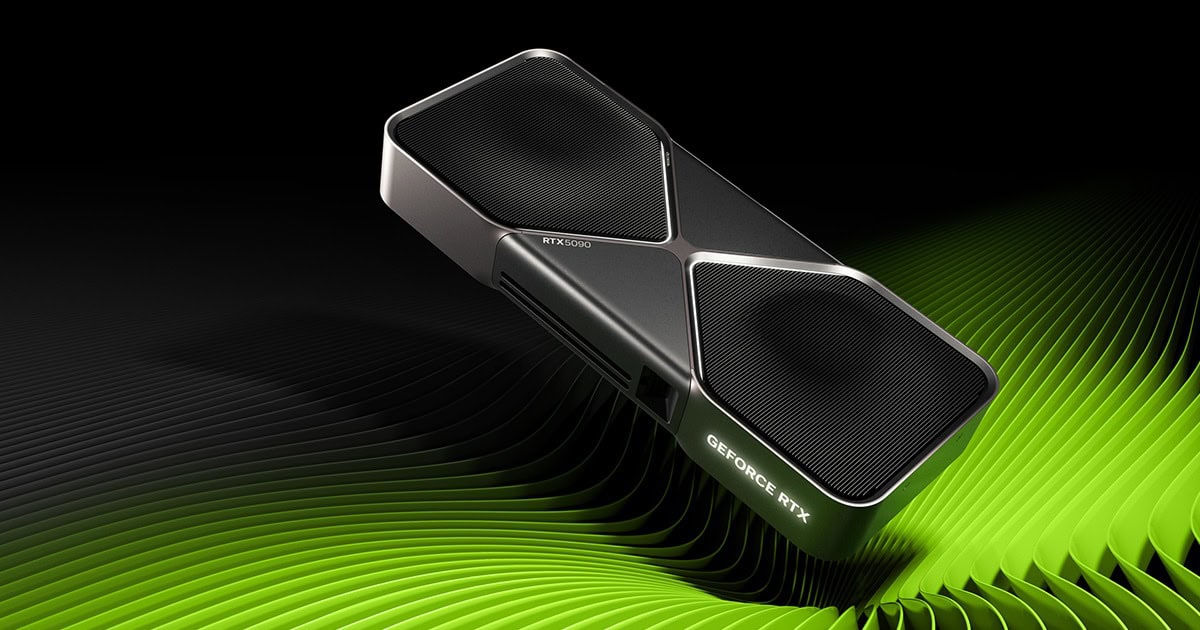
The NVIDIA GeForce RTX 5090 stands as the flagship GPU of the RTX 50‑series and remains one of the most powerful consumer graphics cards available in 2026. Built for enthusiasts, creators, and AI workloads, it pushes real‑time ray tracing, AI acceleration, and raw raster performance to new heights. This guide covers everything you need to know about the RTX 5090 in 2026—from performance and features to who should buy it today.
Overview: What Is the RTX 5090?
The GeForce RTX 5090 is NVIDIA’s top‑tier consumer GPU, succeeding the RTX 4090 and launching alongside the RTX 50‑series in early 2025. By 2026, it has matured with improved drivers, broader game support, and optimized AI frameworks.
Key positioning:
- Ultra‑high‑end gaming (4K and beyond)
- Professional content creation
- Local AI and machine learning workloads
- VR, simulation, and real‑time rendering
Architecture and Technology
The RTX 5090 is based on NVIDIA’s Blackwell architecture, which brought major generational improvements over Ada Lovelace.
Core architectural highlights
- Next‑gen CUDA cores for higher raster performance
- 4th‑generation Ray Tracing cores for more realistic lighting and reflections
- 5th‑generation Tensor cores for AI tasks and DLSS
- Improved power efficiency despite higher performance ceilings
Blackwell also improved scheduling and memory handling, which became especially noticeable in large open‑world games and AI workloads by 2026.
Performance in 2026
Gaming
In 2026, the RTX 5090 remains a 4K and 8K gaming powerhouse:
- Smooth 4K ultra settings in virtually all modern titles
- High‑refresh‑rate 4K gaming (120–240 Hz) in esports and optimized AAA games
- Playable 8K gaming with DLSS enabled
Ray tracing performance is dramatically ahead of previous generations, allowing fully ray‑traced lighting in supported titles without major frame‑rate penalties.
Content Creation
Creators benefit from:
- Faster rendering in Blender, Unreal Engine, and Cinema 4D
- Real‑time playback of complex timelines in DaVinci Resolve and Premiere Pro
- Accelerated AI tools for upscaling, denoising, and video generation
AI and Compute
By 2026, the RTX 5090 is widely used for:
- Local LLM inference
- Stable Diffusion and other generative AI models
- Research and prototyping without relying on cloud GPUs
Its large VRAM pool and advanced Tensor cores make it especially attractive for AI enthusiasts.
DLSS and AI Features
One of the RTX 5090’s biggest long‑term strengths is DLSS:
- DLSS Frame Generation (improved in newer revisions)
- AI‑based upscaling with minimal image loss
- Reduced CPU bottlenecks in demanding games
By 2026, DLSS support is nearly universal among major PC releases, extending the RTX 5090’s lifespan well beyond its launch year.
Power, Cooling, and System Requirements
Power considerations
- Very high power draw under full load
- High‑quality 1000W+ PSU recommended
- Newer power connectors require careful cable management
Cooling
Most RTX 5090 cards are large, triple‑ or quad‑slot designs:
- Excellent thermals with custom partner coolers
- Liquid‑cooled variants remain popular among enthusiasts
Proper case airflow is essential.
Pricing and Value in 2026
By 2026, RTX 5090 pricing varies widely:
- Lower than launch MSRP due to newer GPUs entering the market
- Still expensive compared to mid‑range and high‑end alternatives
Value perspective:
- Excellent for users who fully utilize its power
- Overkill for 1080p or casual gaming
- Best suited for long‑term high‑end builds
Who Should Buy the RTX 5090 in 2026?
Recommended for:
- 4K/8K gamers who want maximum settings
- Content creators working with complex scenes or 8K video
- AI developers and researchers running local models
- Enthusiasts who want a future‑proof GPU
Not ideal for:
- Budget‑conscious buyers
- 1080p or light 1440p gamers
- Small‑form‑factor PC builds
Longevity and Future Outlook
Even in 2026, the RTX 5090 shows strong longevity:
- Driver updates continue to unlock performance gains
- DLSS and AI features scale well into future titles
- Capable of handling next‑generation game engines
It is likely to remain relevant for several more years, especially for users targeting high resolutions and AI workloads.
Final Verdict
The GeForce RTX 5090 remains a no‑compromise GPU in 2026. While its price and power requirements limit its audience, its unmatched performance, AI capabilities, and feature set make it one of the most capable graphics cards ever released.
If you want the absolute best—and plan to use its power—the RTX 5090 is still a top‑tier choice in 2026.