Samsung’s Galaxy lineup has grown from a single Android smartphone into one of the biggest technology ecosystems in the world. Over the years, Samsung has released hundreds of devices across the Galaxy S, Note, Z Fold, Z Flip, A Series, tablets, watches, earbuds, and more.
This guide focuses on the major Samsung Galaxy flagship smartphone releases in chronological order, while also covering the latest Galaxy devices and software developments through 2026.
The Beginning of the Galaxy Era (2009–2010)
Samsung officially introduced the Galaxy brand in 2009 during the early Android smartphone boom. The first Galaxy phone helped establish Samsung as a serious competitor to Apple and HTC in the smartphone market.
2009 — Samsung Galaxy
Release Date: June 2009
The original Samsung Galaxy featured:
- Android operating system
- 3.2-inch touchscreen
- 5MP camera
- Expandable storage
- AMOLED display technology
Although primitive by today’s standards, this device marked the beginning of Samsung’s mobile dominance.
The Rise of the Galaxy S Series
The Galaxy S lineup became Samsung’s flagship smartphone family and eventually one of the best-selling Android series ever created.
2010 — Samsung Galaxy S
Release Date: June 2010
The Galaxy S introduced:
- Super AMOLED displays
- Faster processors
- Improved multimedia features
- A thinner design
This phone became a global success and laid the groundwork for Samsung’s future flagship strategy.
2011 — Samsung Galaxy S II
Release Date: April 2011
Widely considered one of Samsung’s breakthrough devices, the S II featured:
- Dual-core processor
- Slim profile
- Larger 4.3-inch display
- Major performance upgrades
2012 — Samsung Galaxy S III
Release Date: May 2012
The Galaxy S III became one of the most iconic Android phones ever made.
Key features included:
- “Nature-inspired” design
- Smart Stay eye tracking
- Larger 4.8-inch display
- Massive global marketing campaign
2013 — Samsung Galaxy S4
Release Date: April 2013
Samsung heavily focused on software features with:
- Air gestures
- Smart scrolling
- Full HD display
- Improved camera capabilities
2014 — Samsung Galaxy S5
Release Date: April 2014
The Galaxy S5 introduced:
- Water resistance
- Heart rate sensor
- Fingerprint scanner
- Improved battery life
The Premium Design Era (2015–2017)
Samsung dramatically redesigned its phones during this period.
2015 — Galaxy S6 & S6 Edge
Release Date: April 2015
The Galaxy S6 series introduced:
- Glass-and-metal construction
- Curved Edge display
- Wireless charging
- Premium flagship materials
The S6 Edge became especially popular because of its futuristic curved display.
2016 — Galaxy S7 & S7 Edge
Release Date: March 2016
The S7 series refined Samsung’s design language and added:
- IP68 water resistance
- Expandable storage return
- Better low-light camera performance
- Larger batteries
2017 — Galaxy S8 & S8+
Release Date: April 2017
The S8 lineup introduced Samsung’s famous Infinity Display.
Major upgrades:
- Minimal bezels
- Taller aspect ratio
- Iris scanning
- Samsung DeX support
The Modern Galaxy Era (2018–2020)
2018 — Galaxy S9 & S9+
Release Date: March 2018
Samsung focused on camera improvements:
- Variable aperture camera
- Super slow-motion video
- Stereo speakers
- Refined fingerprint placement
2019 — Galaxy S10e, S10, S10+, and S10 5G
Release Date: March 2019
The S10 lineup celebrated the 10th anniversary of Galaxy S devices.
Features included:
- Hole-punch displays
- Ultrasonic fingerprint scanner
- Reverse wireless charging
- First mainstream Samsung 5G phone
2020 — Galaxy S20, S20+, S20 Ultra
Release Date: March 2020
Samsung shifted naming from S11 to S20.
The S20 Ultra introduced:
- 100x Space Zoom
- 108MP camera
- 120Hz display
- Massive camera module
This era also saw Samsung aggressively push 5G adoption.
Galaxy Note Series Legacy
Alongside the S series, Samsung’s Galaxy Note lineup became famous for productivity-focused features and the S Pen.
Important releases included:
- Galaxy Note (2011)
- Galaxy Note 2 (2012)
- Galaxy Note 3 (2013)
- Galaxy Note 4 (2014)
- Galaxy Note 5 (2015)
- Galaxy Note 7 (2016)
- Galaxy Note 8 (2017)
- Galaxy Note 9 (2018)
- Galaxy Note 10 series (2019)
- Galaxy Note 20 series (2020)
The Note series eventually merged into the Galaxy Ultra lineup beginning with the S22 Ultra.
Foldables Change Everything (2019–Present)
Samsung pioneered mainstream foldable smartphones with the Galaxy Z lineup.
Galaxy Fold — 2019
Samsung’s first foldable smartphone introduced a tablet-style folding display.
Galaxy Z Fold Series
- Z Fold 2 — 2020
- Z Fold 3 — 2021
- Z Fold 4 — 2022
- Z Fold 5 — 2023
- Z Fold 6 — 2024
- Z Fold 7 — 2025
- Z Fold 8 — Expected 2026
Galaxy Z Flip Series
- Z Flip — 2020
- Z Flip 3 — 2021
- Z Flip 4 — 2022
- Z Flip 5 — 2023
- Z Flip 6 — 2024
- Z Flip 7 — 2025
- Z Flip 8 — Expected 2026
Foldables became one of Samsung’s biggest innovations and helped define the premium Android market.
Galaxy S21 to Galaxy S25 Era
2021 — Galaxy S21 Series
Release Date: January 2021
Samsung shifted flagship launches earlier into the calendar year.
Highlights:
- New camera design
- Improved zoom
- Better value pricing
2022 — Galaxy S22 Series
Release Date: February 2022
The Galaxy S22 Ultra effectively replaced the Note lineup by including:
- Built-in S Pen
- Squared Note-style design
- Advanced camera system
2023 — Galaxy S23 Series
Release Date: February 2023
The S23 Ultra became highly praised for:
- Snapdragon optimization
- Battery life
- 200MP camera
- Gaming performance
2024 — Galaxy S24 Series
Release Date: January 2024
Samsung heavily emphasized AI features:
- Live translation
- AI photo editing
- Circle to Search
- AI summaries
2025 — Galaxy S25 Series
Release Date: January 2025
The S25 series refined Galaxy AI further while improving:
- Thermal performance
- Battery efficiency
- Camera processing
- On-device AI tasks
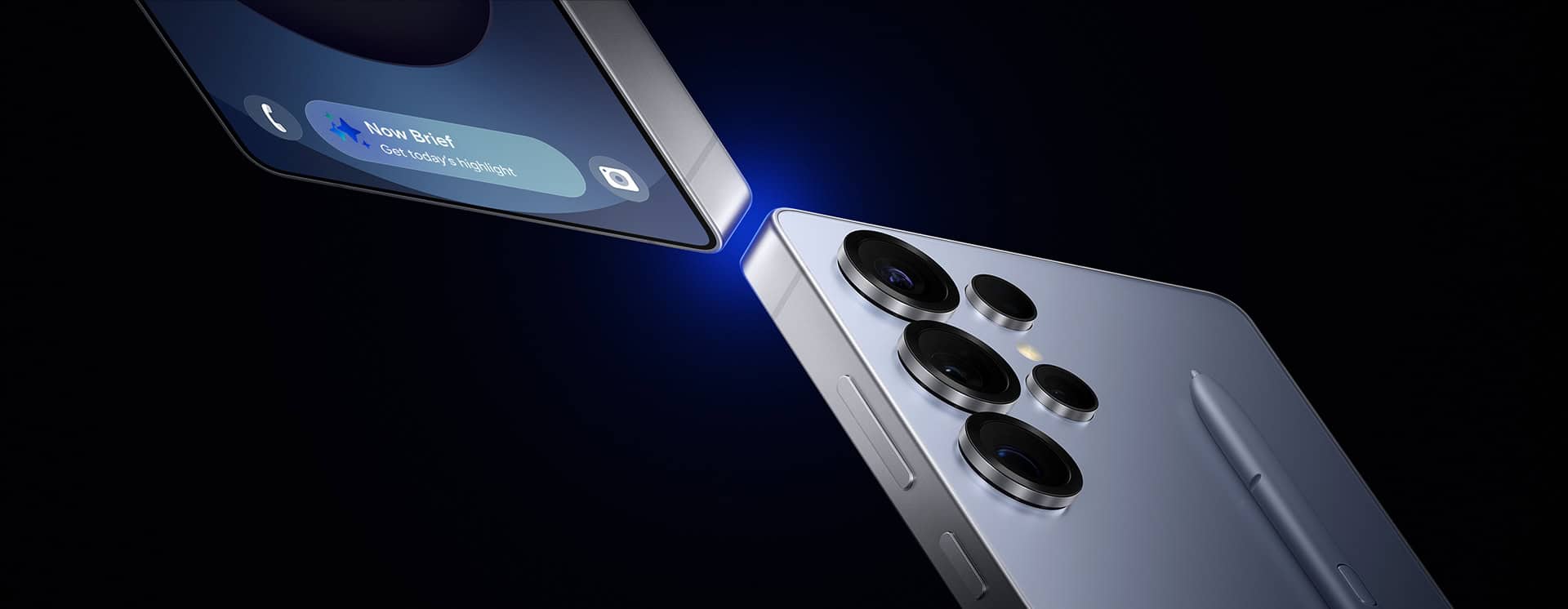
Samsung Galaxy S26 Series (2026)
Samsung officially unveiled the Galaxy S26 series in February 2026 during Galaxy Unpacked. (Samsung Global Newsroom)
The lineup includes:
- Samsung Galaxy S26
- Samsung Galaxy S26+
- Samsung Galaxy S26 Ultra
Samsung describes the S26 lineup as its “most intuitive Galaxy AI phone yet.” (Samsung Global Newsroom)
Major upgrades include:
- Snapdragon 8 Elite Gen 5 for Galaxy
- Advanced Galaxy AI features
- Enhanced Nightography cameras
- Improved thermal systems
- Faster AI processing
- Better battery efficiency
- Enhanced security and privacy tools
The Galaxy S26 Ultra introduced one of Samsung’s biggest display innovations in years: the world’s first built-in Privacy Display on a mobile phone. (Samsung Mobile Press)
Samsung also confirmed:
- Improved professional-grade camera systems
- AI-powered editing tools
- Creative Studio integration
- Smarter assistant capabilities
- More adaptive background AI tasks (Samsung Global Newsroom)
Galaxy Buds4 Series
Samsung launched the new Galaxy Buds4 lineup alongside the S26 series. (Samsung Mobile Press)
New features include:
- Improved Hi-Fi audio
- Enhanced active noise cancellation
- Better AI integration
- Updated ergonomic design
- More immersive sound experience
The Galaxy Buds4 Pro became Samsung’s newest premium earbuds.
One UI 8.5 and One UI 9
Samsung’s software ecosystem has become just as important as its hardware.
In 2026, Samsung began rolling out One UI 8.5 globally. The update introduced:
- Agentic AI
- Creative Studio
- Smarter Bixby
- AI-powered image editing
- Expanded Quick Share functionality
- Improved security protections (Tom’s Guide)
Samsung also launched the One UI 9 beta for the Galaxy S26 series based on Android 17. (Tom’s Guide)
New One UI 9 features include:
- Customizable Quick Panel layouts
- Enhanced Samsung Notes tools
- Better accessibility features
- Security warnings for suspicious apps
- Improved multitasking
The Future of Galaxy
Samsung is continuing to expand beyond traditional smartphones.
Upcoming products and technologies expected in late 2026 include:
- Galaxy Z Fold 8
- Galaxy Z Flip 8
- Android XR smart glasses
- Expanded AI ecosystem integration
- More advanced foldable displays
Samsung’s Galaxy lineup has evolved dramatically since 2009. What began as a single Android phone is now a massive ecosystem of smartphones, foldables, tablets, earbuds, watches, AI services, and experimental XR devices.
From the original Galaxy phone to the AI-powered Galaxy S26 Ultra, Samsung’s release history shows how quickly mobile technology has evolved over the last 17 years.