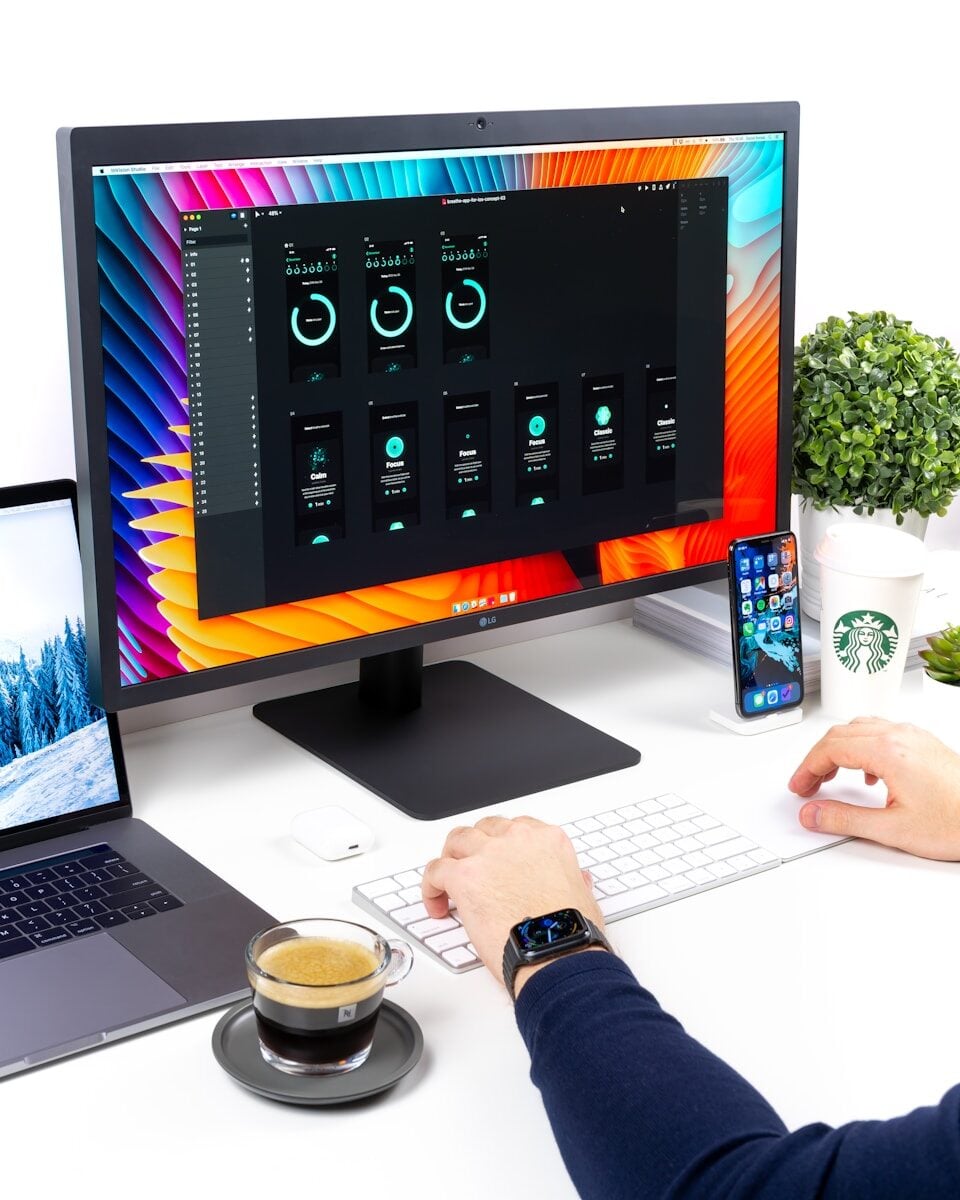
When looking for the best monitors to pair with a Mac, whether it’s a MacBook Pro, MacBook Air, or Mac Mini, the key is to find displays that match the quality and performance of Apple’s own devices. Apple Studio Display and Apple Pro Display XDR have set high standards with their stunning visuals and compatibility with macOS. Users can experience seamless integration and features designed to enhance their workflow on a Mac ecosystem. However, there are various other brands that offer monitors which can complement Apple’s products by providing high-resolution screens, accurate color representation, and features that cater to both general and professional use.
Monitors that are tailored for Mac users should also offer connectivity solutions that align with Apple’s hardware. With Thunderbolt and USB-C ports now commonplace on Apple devices, choosing a monitor that supports these connections can simplify the setup, allowing for a single cable solution for video, data, and power. This ensures an efficient and clutter-free working environment. Additionally, it’s worth considering the display technology, as Mac users often engage in tasks that require color accuracy, such as photo and video editing, which would benefit from monitors with IPS or Retina-equivalent displays.
Best Monitor for Mac: Top Picks for Compatibility and Performance (2026 Guide)
Choosing the best monitor for Mac isn’t just about screen size or price. Macs have specific display preferences—like high pixel density (Retina), Thunderbolt connectivity, and color accuracy—that can make some monitors a better fit than others.
In this guide, we’ll cover:
- What makes a monitor fully compatible with Mac
- The best monitors for MacBook Pro, MacBook Air, Mac Studio, and Mac mini
- A comparison table for quick decision-making
What to Look for in a Monitor for Mac
Before jumping into the top picks, here’s what matters most:
✅ 1. Resolution & Scaling (Retina-Like Clarity)
macOS looks best at:
- 5K (5120×2880) at 27 inches
- 4K (3840×2160) at 24–27 inches
- 6K (6016×3384) at 32 inches
Lower resolutions at larger sizes can look blurry due to scaling.
✅ 2. Thunderbolt or USB-C Connectivity
Look for:
- Thunderbolt 3/4/5 for single-cable charging + display
- At least 90W power delivery for MacBook Pro
- USB hub functionality (extra ports on the monitor)
✅ 3. Color Accuracy
For creatives:
- Wide color gamut (P3 preferred)
- Factory calibration
- IPS or OLED panel
✅ 4. Refresh Rate
- 60Hz is fine for office work.
- 120Hz+ is smoother for scrolling and creative work.
- 144Hz+ is ideal for gaming.
Best Monitors for Mac (2026 Picks)
🥇 1. Apple Studio Display – Best Overall for Mac Users
Best for: MacBook Pro, Mac Studio, creatives
Why it stands out: Seamless macOS integration
- 27-inch 5K Retina (5120×2880)
- 600 nits brightness
- P3 wide color
- Thunderbolt 96W charging
- Built-in speakers, webcam, and mic
✅ Perfect scaling
✅ Native brightness and volume control
❌ Expensive
Ideal if you want a plug-and-play Apple experience.
🥈 2. LG 27GP950-B – Best 4K High-Refresh Option
Best for: Power users & gamers
- 27-inch 4K (3840×2160)
- 144Hz refresh rate
- HDMI 2.1 + DisplayPort
- Excellent color accuracy
✅ Sharp 4K display
✅ Great for gaming + productivity
❌ No true 5K scaling
🥉 3. Dell UltraSharp U2720Q – Best Value for Professionals
Best for: Office & productivity
- 27-inch 4K IPS
- Thunderbolt 3
- 90W charging
- Excellent color calibration
✅ Reliable and affordable
✅ Clean design
❌ 60Hz only
💎 4. Samsung ViewFinity S9 (5K) – Best Apple Studio Display Alternative
Best for: 5K resolution without Apple pricing
- 27-inch 5K (5120×2880)
- Thunderbolt + USB-C
- Slim metal design
- Matte display option
✅ 5K Retina clarity
✅ Lower cost than Studio Display
❌ Speakers not as strong
🎮 5. ASUS ProArt Display OLED (PA32D) – Best for Creatives
Best for: Video editors, photographers, designers
- OLED panel
- 4K resolution
- 120Hz refresh rate
- Exceptional color accuracy
✅ Deep blacks
✅ Professional color grading
❌ Premium price
Comparison Table: Best Monitors for Mac (2026)
| Monitor | Size | Resolution | Refresh Rate | Thunderbolt | Power Delivery | Best For |
|---|---|---|---|---|---|---|
| Apple Studio Display | 27″ | 5K (5120×2880) | 60Hz | ✅ TB | 96W | Seamless Mac integration |
| Samsung ViewFinity S9 | 27″ | 5K | 60Hz | ✅ TB | 90W | 5K alternative |
| Dell UltraSharp U2720Q | 27″ | 4K | 60Hz | ✅ TB | 90W | Office & productivity |
| LG 27GP950-B | 27″ | 4K | 144Hz | ⚠️ Limited | No | Gaming + multitasking |
| ASUS ProArt OLED | 32″ | 4K | 120Hz | ✅ TB | 65W | Professional creatives |
Best Monitor by Mac Model
✅ Best for MacBook Air
- Dell UltraSharp U2720Q
- Samsung ViewFinity S9
✅ Best for MacBook Pro (M1/M2/M3)
- Apple Studio Display
- ASUS ProArt OLED
✅ Best for Mac Studio
- Apple Studio Display
- Dual 4K Dell UltraSharp setup
4K vs 5K for Mac: Which Is Better?
If you want:
- Perfect macOS scaling → Go 5K (27-inch ideal)
- Budget-friendly clarity → 4K works great
- Ultra-precise creative work → 5K or 6K
Macs handle 5K beautifully, which is why many users prefer it over standard 4K.
Final Verdict
The best monitor for Mac overall is the Apple Studio Display if you want seamless integration and Retina-level sharpness.
If you want:
- 💰 Better value → Dell UltraSharp
- 🖥 5K without Apple pricing → Samsung ViewFinity S9
- 🎮 High refresh rate → LG 27GP950-B
- 🎨 Creative precision → ASUS ProArt OLED
Your ideal monitor depends on your workflow, but prioritizing 5K resolution and Thunderbolt connectivity will give you the best Mac experience.
Key Takeaways
- Compatibility and integration with Mac systems are essential for selecting the best monitor.
- The right display technology can greatly enhance visual tasks on a Mac.
- Monitors must offer suitable connectivity to align with Mac hardware.
Choosing the Right Display Technology
Display technology is a crucial factor when selecting a monitor for a Mac. It affects how images are rendered, the accuracy of colors, and the clarity of text and graphics. This section will guide you through various aspects of display technology to consider for the best viewing experience with your Mac.
Understanding Screen Resolution and Size
Monitors come with different resolutions like 4k and 5k. The term “4k” means a monitor displays about 4,000 pixels across its width. A “5k” monitor displays roughly 5,000. A higher resolution offers sharper images and more workspace. Mac’s Retina display is an example of a high-resolution screen designed to make each pixel indistinguishable to the human eye at a normal viewing distance. This leads to clearer and more detailed images, especially on large screens, where the size translates to more space for windows and tools.
Comparing Panel Types: IPS vs. Others
The type of panel in a monitor affects the viewing angles and color reproduction. IPS (In-Panel Switching) panels are known for their wide viewing angles and strong color performance. They stand out in color accuracy with reliable representation of sRGB and DCI-P3 color spaces. Other panel types like TN (Twisted Nematic) and VA (Vertical Alignment) may offer faster refresh rates or higher contrasts but usually do not match the color performance of IPS panels.
The Importance of Color Accuracy and Space
Color accuracy is vital for professionals who work with visual media. Monitors that support full sRGB coverage and a broad part of the DCI-P3 gamut display more accurate and vibrant colors. Look for a low Delta E value, which means the monitor displays colors as they are intended to be seen. This is important for tasks that depend on true-to-life colors.
HDR, Brightness, and Contrast Considerations
HDR (High Dynamic Range) enhances the contrast and color of the picture providing a more realistic image. Monitors with HDR support should have high brightness levels, measured in nits, and a high contrast ratio. These features contribute to more nuanced shadows and highlights. HDR10 is a commonly supported HDR format for displays. Look for monitors with a peak brightness of at least 500 nits to take full advantage of HDR content.
Connectivity and Compatibility
Choosing the right monitor for a Mac involves considering how it will connect to the computer. Key factors include the types of ports available and how they match with a Mac’s ports and the potential compatibility issues that might arise. Professionals and gamers have specific needs that can influence their choices.
Ports: Beyond Just HDMI and USB-C
Monitors connect through various ports. HDMI and USB-C are common, but it’s important to check for others like DisplayPort and Thunderbolt 3 or 4. For example, the Dell Ultrasharp U2720Q and ASUS ProArt Display PA278CV offer a variety of ports, ensuring they can cater to different devices beyond Macs. Users should note what ports their Macs have. For instance, recent MacBooks may only have USB-C ports, which means a monitor with USB-C is essential for a straightforward connection.
Mac and Monitor Compatibility Issues
Sometimes Macs may not work seamlessly with all monitors. The MacOS plays a role in this. Specific features, like True Tone or Night Shift, might not be available on external displays. The Pro Display XDR is built for Macs, thus avoiding such issues. But with non-Apple options like the LG UltraFine 5K or Gigabyte M27Q, users should verify compatibility regarding resolution support and refresh rates that MacOS can handle to avoid problems.
Considerations for Professionals and Gamers
Professionals often need precise colors and sharp details. Monitors like the BenQ PD2706UA have become popular for their color accuracy. Gamers, on the other hand, should look at refresh rates and resolution. The Samsung M8 Smart Monitor offers a balance for those who aren’t hard-core gamers but still appreciate smooth visuals. They may also want to consider features like KVM switches, which are available in the Dell S2721QS, allowing them to control multiple devices with one set of keyboard and mouse.