

AMD’s Socket AM5 platform represents the company’s latest desktop processor ecosystem, supporting DDR5 memory and PCIe 5.0 technology. According to AMD’s official specifications, all AM5 motherboards are compatible with all AM5 processors, meaning you can use any Socket AM5 board with AMD Ryzen 7000, 8000, and 9000 series processors. This comprehensive guide covers all 55 compatible AM5 CPUs currently available.
What is AMD Socket AM5?
Socket AM5 is AMD’s LGA (Land Grid Array) socket that replaced the previous AM4 platform. It supports multiple chipsets including the AMD 600 and 800 series, providing unprecedented flexibility for builders who want to choose their ideal motherboard and processor combination without compatibility concerns.
AMD AM5 Processor Families
The AM5 platform hosts several distinct processor families:
- Ryzen 9000 Series – Latest Zen 5 architecture processors
- Ryzen 8000 Series – APUs with integrated Radeon graphics
- Ryzen 7000 Series – Original Zen 4 architecture processors
- Ryzen PRO Series – Enterprise and business-focused CPUs
- EPYC 4000 Series – Entry-level server processors
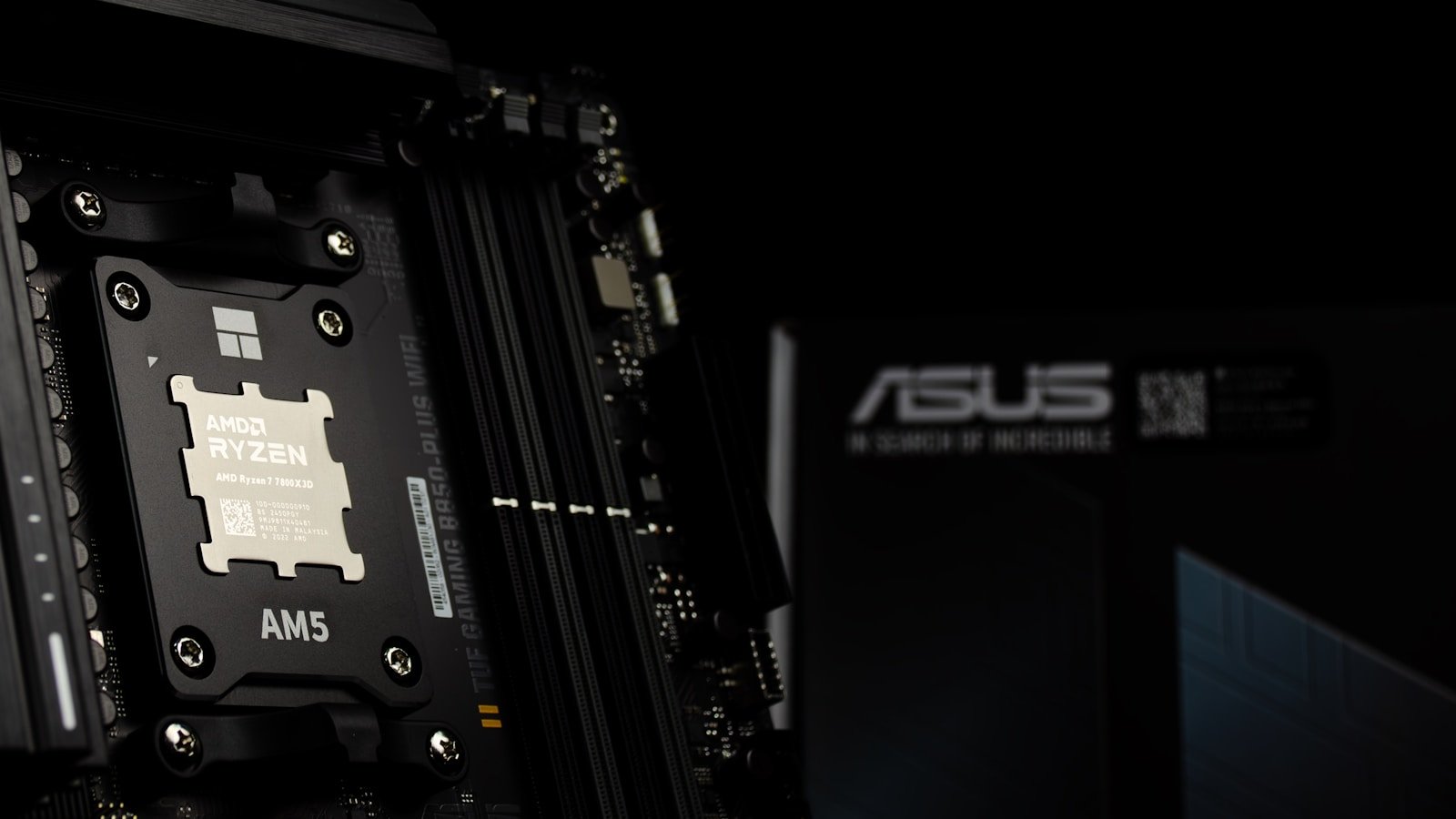
Complete AMD Ryzen 9 AM5 CPU List
The Ryzen 9 lineup represents AMD’s flagship desktop processors, offering the highest core counts and best performance for gaming, content creation, and professional workloads.
| Processor | Cores | Base Clock | Boost Clock | Architecture | TDP | Graphics |
|---|---|---|---|---|---|---|
| AMD Ryzen 9 PRO 9945 | 12 | 3.4 GHz | 5.4 GHz | Zen 5 | 65 W | Radeon |
| AMD Ryzen 9 PRO 7945 | 12 | 3.7 GHz | 5.4 GHz | Zen 4 | 65 W | Radeon |
| AMD Ryzen 9 9950X3D | 16 | 4.3 GHz | 5.7 GHz | Zen 5 | 170 W | Radeon |
| AMD Ryzen 9 9950X | 16 | 4.3 GHz | 5.7 GHz | Zen 5 | 170 W | Radeon |
| AMD Ryzen 9 9900X3D | 12 | 4.4 GHz | 5.5 GHz | Zen 5 | 120 W | Radeon |
| AMD Ryzen 9 9900X | 12 | 4.4 GHz | 5.6 GHz | Zen 5 | 120 W | Radeon |
| AMD Ryzen 9 7950X3D | 16 | 4.2 GHz | 5.7 GHz | Zen 4 | 120 W | Radeon |
| AMD Ryzen 9 7950X | 16 | 4.5 GHz | 5.7 GHz | Zen 4 | 170 W | Radeon |
| AMD Ryzen 9 7900X3D | 12 | 4.4 GHz | 5.6 GHz | Zen 4 | 120 W | Radeon |
| AMD Ryzen 9 7900X | 12 | 4.7 GHz | 5.6 GHz | Zen 4 | 170 W | Radeon |
| AMD Ryzen 9 7900 | 12 | 3.7 GHz | 5.4 GHz | Zen 4 | 65 W | Radeon |
Ryzen 9 Highlights
The Ryzen 9 9950X3D and 9950X lead the pack with 16 cores and boost speeds up to 5.7 GHz, making them ideal for heavy multitasking and professional applications. The X3D variants feature AMD’s 3D V-Cache technology, which dramatically improves gaming performance by adding additional L3 cache directly on the processor die.
Complete AMD Ryzen 7 AM5 CPU List
Ryzen 7 processors deliver excellent 8-core performance for gaming and productivity, striking a balance between price and capability.
| Processor | Cores | Base Clock | Boost Clock | Architecture | TDP | Graphics |
|---|---|---|---|---|---|---|
| AMD Ryzen 7 PRO 9745 | 8 | 3.8 GHz | 5.4 GHz | Zen 5 | 65 W | Radeon |
| AMD Ryzen 7 PRO 7745 | 8 | 3.8 GHz | 5.3 GHz | Zen 4 | 65 W | Radeon |
| AMD Ryzen 7 9800X3D | 8 | 4.7 GHz | 5.2 GHz | Zen 5 | 120 W | Radeon |
| AMD Ryzen 7 9700X | 8 | 3.8 GHz | 5.5 GHz | Zen 5 | 65 W | Radeon |
| AMD Ryzen 7 9700F | 8 | 3.8 GHz | 5.5 GHz | Zen 5 | 65 W | None |
| AMD Ryzen 7 8700G | 8 | 4.2 GHz | 5.1 GHz | Zen 4 | 65 W | Radeon 780M |
| AMD Ryzen 7 8700F | 8 | 4.1 GHz | 5.0 GHz | Zen 4 | 65 W | None |
| AMD Ryzen 7 7800X3D | 8 | 4.2 GHz | 5.0 GHz | Zen 4 | 120 W | Radeon |
| AMD Ryzen 7 7700X | 8 | 4.5 GHz | 5.4 GHz | Zen 4 | 105 W | Radeon |
| AMD Ryzen 7 7700 | 8 | 3.6 GHz | 5.3 GHz | Zen 4 | 65 W | Radeon |
Ryzen 7 Highlights
The Ryzen 7 9800X3D and 7800X3D are among the most popular gaming CPUs ever released, with the 3D V-Cache technology providing exceptional gaming performance. The 8700G stands out with its powerful integrated Radeon 780M graphics, making it perfect for compact builds without a discrete GPU.
Complete AMD Ryzen 5 AM5 CPU List
Ryzen 5 processors offer 6-core performance that’s ideal for gaming and general computing tasks at mainstream price points.
| Processor | Cores | Base Clock | Boost Clock | Architecture | TDP | Graphics |
|---|---|---|---|---|---|---|
| AMD Ryzen 5 PRO 9645 | 6 | 3.9 GHz | 5.4 GHz | Zen 5 | 65 W | Radeon |
| AMD Ryzen 5 PRO 7645 | 6 | 3.8 GHz | 5.1 GHz | Zen 4 | 65 W | Radeon |
| AMD Ryzen 5 PRO 7445 | 6 | 3.3 GHz | 4.3 GHz | Zen 4 | 65 W | Radeon |
| AMD Ryzen 5 9600X | 6 | 3.9 GHz | 5.4 GHz | Zen 5 | 65 W | Radeon |
| AMD Ryzen 5 9600 | 6 | 3.8 GHz | 5.2 GHz | Zen 5 | 65 W | Radeon |
| AMD Ryzen 5 9500F | 6 | 3.8 GHz | 5.0 GHz | Zen 5 | 65 W | None |
| AMD Ryzen 5 8600G | 6 | 4.3 GHz | 5.0 GHz | Zen 4 | 65 W | Radeon 760M |
| AMD Ryzen 5 8500G | 6 | 4.1 GHz | 5.0 GHz | Zen 4 | 65 W | Radeon 740M |
| AMD Ryzen 5 8400F | 6 | 4.2 GHz | 4.7 GHz | Zen 4 | 65 W | None |
| AMD Ryzen 5 7600X3D | 6 | 4.1 GHz | 4.7 GHz | Zen 4 | 65 W | Radeon |
| AMD Ryzen 5 7600X | 6 | 4.7 GHz | 5.3 GHz | Zen 4 | 105 W | Radeon |
| AMD Ryzen 5 7600 | 6 | 3.8 GHz | 5.1 GHz | Zen 4 | 65 W | Radeon |
| AMD Ryzen 5 7500X3D | 6 | 4.0 GHz | 4.5 GHz | Zen 4 | 65 W | Radeon |
| AMD Ryzen 5 7500F | 6 | 3.7 GHz | 5.0 GHz | Zen 4 | 65 W | None |
| AMD Ryzen 5 7400F | 6 | 3.7 GHz | 4.7 GHz | Zen 4 | 65 W | None |
| AMD Ryzen 5 7400 | 6 | 3.3 GHz | 4.3 GHz | Zen 4 | 65 W | Radeon |
Ryzen 5 Highlights
The Ryzen 5 9600X provides the latest Zen 5 architecture at a competitive price point, while the 7600X3D brings 3D V-Cache technology to the mainstream segment. The 8600G with Radeon 760M graphics is perfect for budget builds that still need decent integrated graphics performance.
Complete AMD EPYC 4000 Series AM5 CPU List
AMD’s EPYC 4000 series brings server-grade features to the AM5 platform, offering enhanced security, manageability, and reliability for small business servers and workstations.
| Processor | Cores | Base Clock | Boost Clock | Architecture | TDP | Graphics |
|---|---|---|---|---|---|---|
| AMD EPYC 4585PX | 16 | 4.3 GHz | 5.7 GHz | Zen 5 | 170 W | Radeon |
| AMD EPYC 4584PX | 16 | 4.2 GHz | 5.7 GHz | Zen 4 | 120 W | Radeon |
| AMD EPYC 4565P | 16 | 4.3 GHz | 5.7 GHz | Zen 5 | 170 W | Radeon |
| AMD EPYC 4564P | 16 | 4.5 GHz | 5.7 GHz | Zen 4 | 170 W | Radeon |
| AMD EPYC 4545P | 16 | 3.0 GHz | 5.4 GHz | Zen 5 | 65 W | Radeon |
| AMD EPYC 4484PX | 12 | 4.4 GHz | 5.6 GHz | Zen 4 | 120 W | Radeon |
| AMD EPYC 4465P | 12 | 3.4 GHz | 5.4 GHz | Zen 5 | 65 W | Radeon |
| AMD EPYC 4464P | 12 | 3.7 GHz | 5.4 GHz | Zen 4 | 65 W | Radeon |
| AMD EPYC 4364P | 8 | 4.5 GHz | 5.4 GHz | Zen 4 | 105 W | Radeon |
| AMD EPYC 4345P | 8 | 3.8 GHz | 5.5 GHz | Zen 5 | 65 W | Radeon |
| AMD EPYC 4344P | 8 | 3.8 GHz | 5.3 GHz | Zen 4 | 65 W | Radeon |
| AMD EPYC 4245P | 6 | 3.9 GHz | 5.4 GHz | Zen 5 | 65 W | Radeon |
| AMD EPYC 4244P | 6 | 3.8 GHz | 5.1 GHz | Zen 4 | 65 W | Radeon |
EPYC 4000 Series Highlights
According to AMD’s official EPYC 4005 series page, these processors “extend the broad AMD EPYC processor family, powering a new line of entry level systems designed for small” businesses and workstations. The EPYC 4000 series uses the same AM5 socket as consumer Ryzen processors but adds enterprise features like ECC memory support, enhanced security features, and longer warranty periods.
The EPYC 4585PX and 4565P top the lineup with 16 cores and Zen 5 architecture, while the 4245P and 4244P provide 6-core options for less demanding server workloads.
Understanding AM5 CPU Naming Conventions
AMD’s naming scheme for AM5 processors follows clear patterns:
- X suffix – High-performance models with higher TDP (105-170W)
- X3D suffix – Models with 3D V-Cache technology for enhanced gaming performance
- G suffix – APUs with integrated graphics (8000 series)
- F suffix – Models without integrated graphics
- PRO designation – Business-focused models with enhanced security and manageability
- No suffix – Standard efficiency models (typically 65W TDP)
Zen 4 vs Zen 5 Architecture
The AM5 platform currently supports both Zen 4 and Zen 5 architecture processors:
Zen 4 (Ryzen 7000 Series)
- 5nm manufacturing process
- DDR5 and PCIe 5.0 support
- Integrated RDNA 2 graphics on most models
- Up to 16 cores on consumer platforms
Zen 5 (Ryzen 9000 Series)
- Enhanced 4nm manufacturing process
- Improved IPC (Instructions Per Clock) performance
- Better power efficiency
- Advanced branch prediction and prefetching
- Same core counts but higher efficiency
According to CPU Monkey’s AM5 socket listing, both architectures share the same LGA 1718 socket design, ensuring full backward and forward compatibility across AM5 motherboards.
Which AM5 CPU Should You Choose?
For Gaming:
- Best overall: Ryzen 7 9800X3D or 7800X3D
- High-end: Ryzen 9 9950X3D or 7950X3D
- Budget: Ryzen 5 7600X or 9600X
For Content Creation:
- Best: Ryzen 9 9950X or 7950X (16 cores)
- Mid-range: Ryzen 9 9900X or 7900X (12 cores)
- Budget: Ryzen 7 9700X or 7700X (8 cores)
For Compact/HTPC Builds:
- Best APU: Ryzen 7 8700G (Radeon 780M)
- Budget APU: Ryzen 5 8600G (Radeon 760M)
- Entry APU: Ryzen 5 8500G (Radeon 740M)
For Small Business/Servers:
- High-end: EPYC 4585PX or 4565P (16 cores)
- Mid-range: EPYC 4465P or 4464P (12 cores)
- Entry: EPYC 4245P or 4244P (6 cores)
AM5 Platform Features
All AM5 processors benefit from these platform features:
- DDR5 Memory Support – Faster memory speeds and improved bandwidth
- PCIe 5.0 – Next-generation connectivity for GPUs and storage
- Dual-Channel Memory – All processors support dual-channel DDR5
- Overclocking Support – Most X and non-F models support overclocking (with compatible motherboards)
- Integrated Graphics – Most models include basic Radeon graphics (except F-suffix models)
Complete AM5 CPU List (2026)
| Model | Cores | Clock | Boost | Generation | TDP |
| AMD EPYC 4244P | 6 | 3.8 GHz | 5.1 GHz | Zen 4 | 65 W |
| AMD EPYC 4245P | 6 | 3.9 GHz | 5.4 GHz | Zen 5 | 65 W |
| AMD EPYC 4344P | 8 | 3.8 GHz | 5.3 GHz | Zen 4 | 65 W |
| AMD EPYC 4345P | 8 | 3.8 GHz | 5.5 GHz | Zen 5 | 65 W |
| AMD EPYC 4364P | 8 | 4.5 GHz | 5.4 GHz | Zen 4 | 105 W |
| AMD EPYC 4464P | 12 | 3.7 GHz | 5.4 GHz | Zen 4 | 65 W |
| AMD EPYC 4465P | 12 | 3.4 GHz | 5.4 GHz | Zen 5 | 65 W |
| AMD EPYC 4484PX | 12 | 4.4 GHz | 5.6 GHz | Zen 4 | 120 W |
| AMD EPYC 4545P | 16 | 3 GHz | 5.4 GHz | Zen 5 | 65 W |
| AMD EPYC 4564P | 16 | 4.5 GHz | 5.7 GHz | Zen 4 | 170 W |
| AMD EPYC 4565P | 16 | 4.3 GHz | 5.7 GHz | Zen 5 | 170 W |
| AMD EPYC 4584PX | 16 | 4.2 GHz | 5.7 GHz | Zen 4 | 120 W |
| AMD EPYC 4585PX | 16 | 4.3 GHz | 5.7 GHz | Zen 5 | 170 W |
| AMD Ryzen 5 7400 | 6 | 3.3 GHz | 4.3 GHz | Zen 4 | 65 W |
| AMD Ryzen 5 7400F | 6 | 3.7 GHz | 4.7 GHz | Zen 4 | 65 W |
| AMD Ryzen 5 7500F | 6 | 3.7 GHz | 5 GHz | Zen 4 | 65 W |
| AMD Ryzen 5 7500X3D | 6 | 4 GHz | 4.5 GHz | Zen 4 | 65 W |
| AMD Ryzen 5 7600 | 6 | 3.8 GHz | 5.1 GHz | Zen 4 | 65 W |
| AMD Ryzen 5 7600X | 6 | 4.7 GHz | 5.3 GHz | Zen 4 | 105 W |
| AMD Ryzen 5 7600X3D | 6 | 4.1 GHz | 4.7 GHz | Zen 4 | 65 W |
| AMD Ryzen 5 8400F | 6 | 4.2 GHz | 4.7 GHz | Zen 4 | 65 W |
| AMD Ryzen 5 8500G | 6 | 4.1 GHz | 5 GHz | Zen 4 | 65 W |
| AMD Ryzen 5 8600G | 6 | 4.3 GHz | 5 GHz | Zen 4 | 65 W |
| AMD Ryzen 5 9500F | 6 | 3.8 GHz | 5 GHz | Zen 5 | 65 W |
| AMD Ryzen 5 9600 | 6 | 3.8 GHz | 5.2 GHz | Zen 5 | 65 W |
| AMD Ryzen 5 9600X | 6 | 3.9 GHz | 5.4 GHz | Zen 5 | 65 W |
| AMD Ryzen 5 PRO 7445 | 6 | 3.3 GHz | 4.3 GHz | Zen 4 | 65 W |
| AMD Ryzen 5 PRO 7645 | 6 | 3.8 GHz | 5.1 GHz | Zen 4 | 65 W |
| AMD Ryzen 5 PRO 9645 | 6 | 3.9 GHz | 5.4 GHz | Zen 5 | 65 W |
| AMD Ryzen 7 7700 | 8 | 3.6 GHz | 5.3 GHz | Zen 4 | 65 W |
| AMD Ryzen 7 7700X | 8 | 4.5 GHz | 5.4 GHz | Zen 4 | 105 W |
| AMD Ryzen 7 7800X3D | 8 | 4.2 GHz | 5 GHz | Zen 4 | 120 W |
| AMD Ryzen 7 8700F | 8 | 4.1 GHz | 5 GHz | Zen 4 | 65 W |
| AMD Ryzen 7 8700G | 8 | 4.2 GHz | 5.1 GHz | Zen 4 | 65 W |
| AMD Ryzen 7 9700F | 8 | 3.8 GHz | 5.5 GHz | Zen 5 | 65 W |
| AMD Ryzen 7 9700X | 8 | 3.8 GHz | 5.5 GHz | Zen 5 | 65 W |
| AMD Ryzen 7 9800X3D | 8 | 4.7 GHz | 5.2 GHz | Zen 5 | 120 W |
| AMD Ryzen 7 PRO 7745 | 8 | 3.8 GHz | 5.3 GHz | Zen 4 | 65 W |
| AMD Ryzen 7 PRO 9745 | 8 | 3.8 GHz | 5.4 GHz | Zen 5 | 65 W |
| AMD Ryzen 9 7900 | 12 | 3.7 GHz | 5.4 GHz | Zen 4 | 65 W |
| AMD Ryzen 9 7900X | 12 | 4.7 GHz | 5.6 GHz | Zen 4 | 170 W |
| AMD Ryzen 9 7900X3D | 12 | 4.4 GHz | 5.6 GHz | Zen 4 | 120 W |
| AMD Ryzen 9 7950X | 16 | 4.5 GHz | 5.7 GHz | Zen 4 | 170 W |
| AMD Ryzen 9 7950X3D | 16 | 4.2 GHz | 5.7 GHz | Zen 4 | 120 W |
| AMD Ryzen 9 9900X | 12 | 4.4 GHz | 5.6 GHz | Zen 5 | 120 W |
| AMD Ryzen 9 9900X3D | 12 | 4.4 GHz | 5.5 GHz | Zen 5 | 120 W |
| AMD Ryzen 9 9950X | 16 | 4.3 GHz | 5.7 GHz | Zen 5 | 170 W |
| AMD Ryzen 9 9950X3D | 16 | 4.3 GHz | 5.7 GHz | Zen 5 | 170 W |
| AMD Ryzen 9 PRO 7945 | 12 | 3.7 GHz | 5.4 GHz | Zen 4 | 65 W |
| AMD Ryzen 9 PRO 9945 | 12 | 3.4 GHz | 5.4 GHz | Zen 5 | 65 W |
Conclusion
The AM5 platform offers an impressive selection of 55 processors spanning multiple performance tiers and use cases. From the budget-friendly Ryzen 5 7400 to the flagship Ryzen 9 9950X3D, AMD has created a comprehensive ecosystem that caters to gamers, content creators, professionals, and businesses alike.
The platform’s forward compatibility means that early AM5 adopters can upgrade to newer Zen 5 processors without changing motherboards, while new buyers can choose from the entire lineup based on their specific needs and budget. According to sources like CPU-List.org, AMD’s AM5 socket represents a significant technological leap with its support for DDR5, PCIe 5.0, and advanced features like EXPO memory overclocking.
Whether you’re building a gaming PC, workstation, or small business server, the AM5 platform has a processor that fits your requirements—and the flexibility to upgrade as your needs evolve.